

In July 2024, DeFF officially launched the patented Airput vacuum-suction in-car wireless charging phone mount, using its unique high-efficiency vacuum pump extraction technology, certified under both NCC and BSMI, and equipped with up to
Qi 15W wireless fast charging — opening up a completely new look for the phone mount market. Used in a car, its remarkable holding power keeps the phone securely
attached to the mount, delivering a high-quality user experience. I picked one up as soon as it launched in Japan, and after using it for a while now, I'm extremely satisfied with
the stability and improved driving safety it provides.
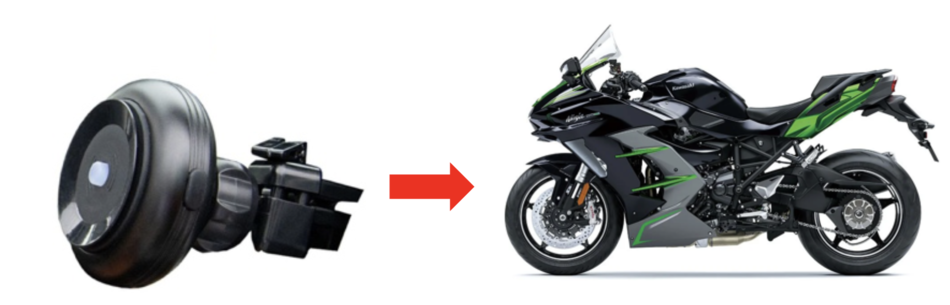
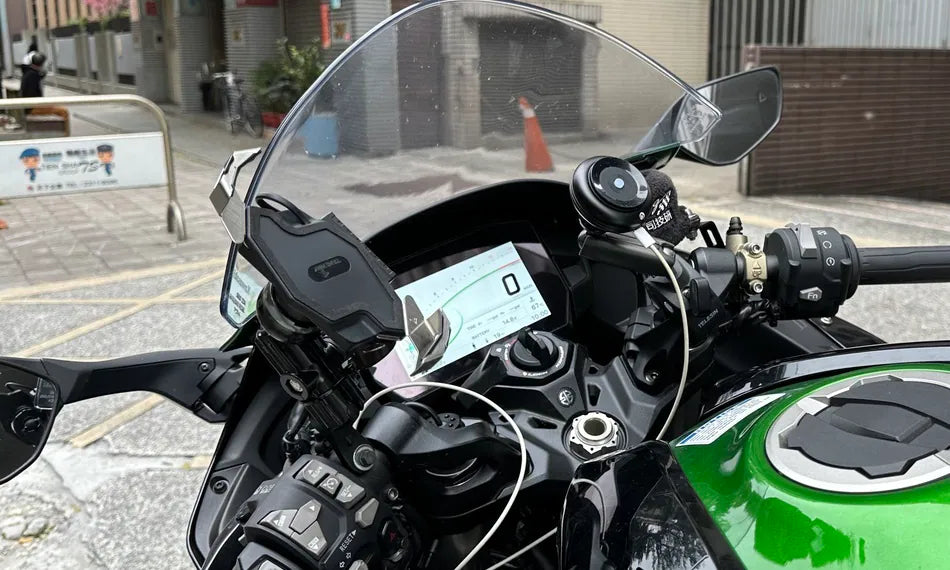
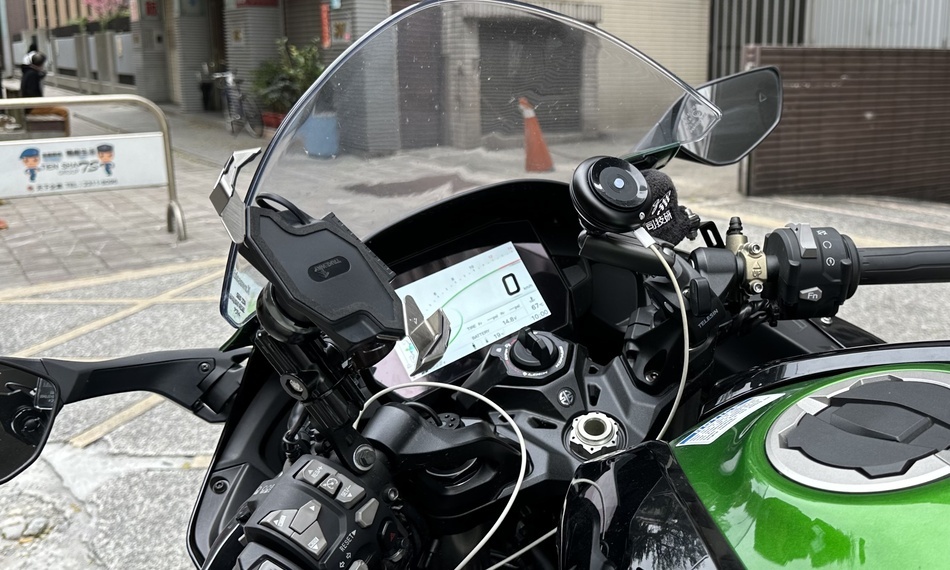
But then an idea occurred to me: what kind of experience would you get using Airput on a motorcycle, an environment with much higher risk factors? Could the
officially claimed super-strong holding power really withstand all the external forces a motorcycle encounters on the road? So I decided to run a test: installing Airput on
a motorcycle to find out exactly what it feels like to have it mounted on the handlebars! For this test, I used two motorcycles: a
Burgman 400 for daily commuting, and an H2 SX SE for long weekend rides. Thanks to my friend and fellow rider for the strong support, letting Airput show off its stuff on one of the most powerful sport tourers around~
First, a quick introduction to this ingenious phone mount:
The Airput's shell is built from aluminum alloy with a premium sandblasted texture, completely doing away with the cheap plastic feel of ordinary phone mounts.
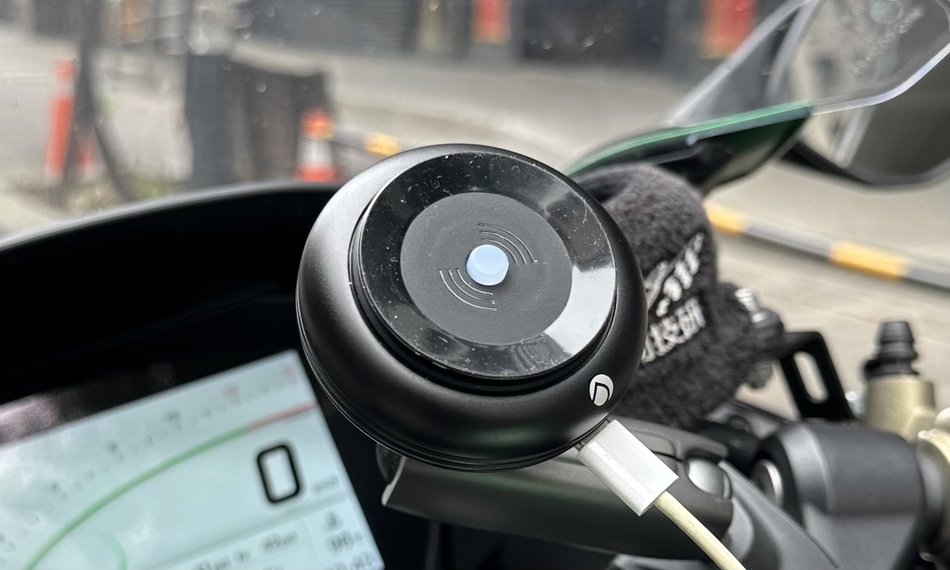
The translucent sensor button in the center gets gently pressed when the phone is placed against it, activating the mount. Beneath it lies the heart of the Airput: a high-efficiency
vacuum pump motor. The remaining battery level of the mount's built-in battery is also indicated by a flashing blue light through the translucent button.
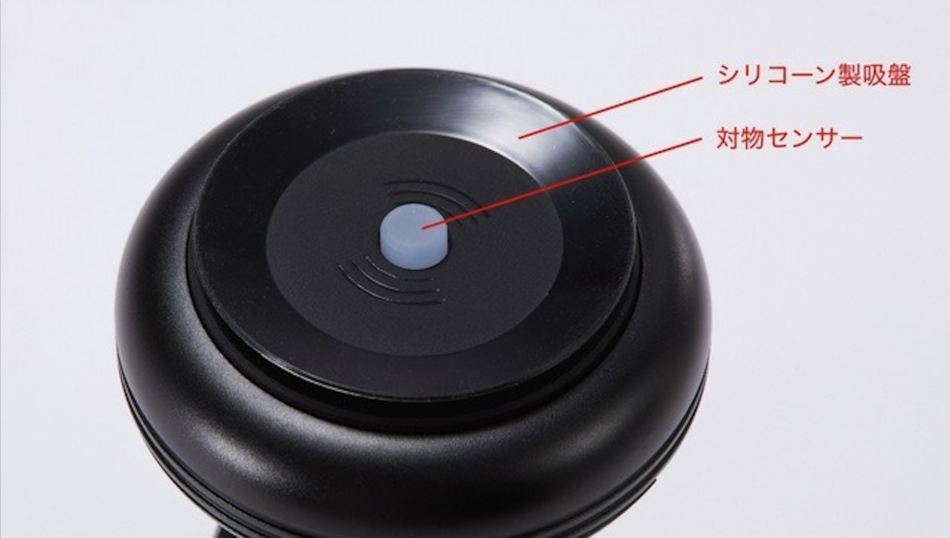
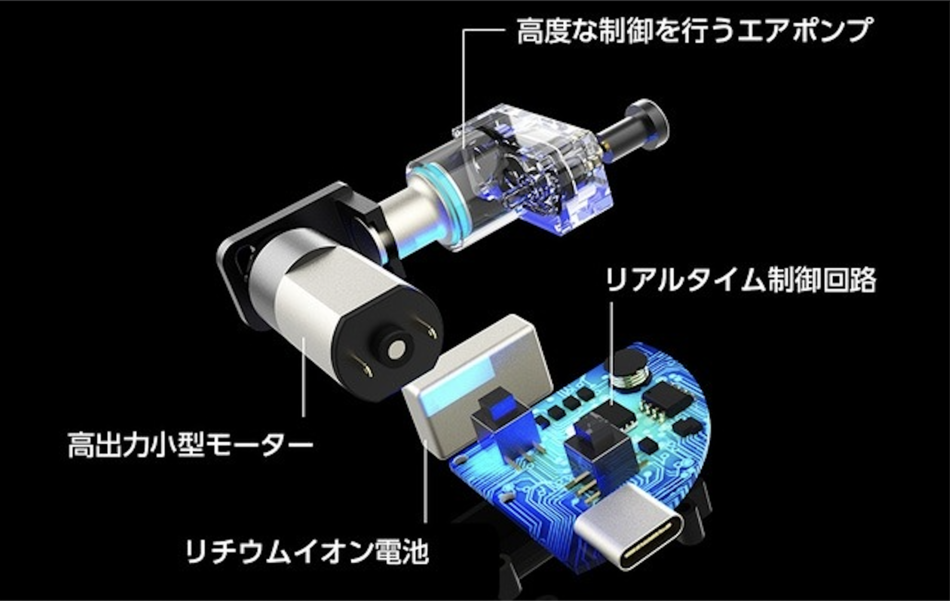
The high-efficiency vacuum pump motor built into the Airput draws the air out from between the phone's back cover or case and the silicone suction pad to create a vacuum, continuously monitored by an air pressure sensor. When it
detects a drop in suction, it activates the pump to expel air, using the Magdeburg hemispheres principle to hold the phone tightly against the mount's disc. Airput also has a built-in backup battery, which
briefly maintains suction if the vehicle's power is cut off, preventing the phone from falling and being damaged the instant the engine is switched off.
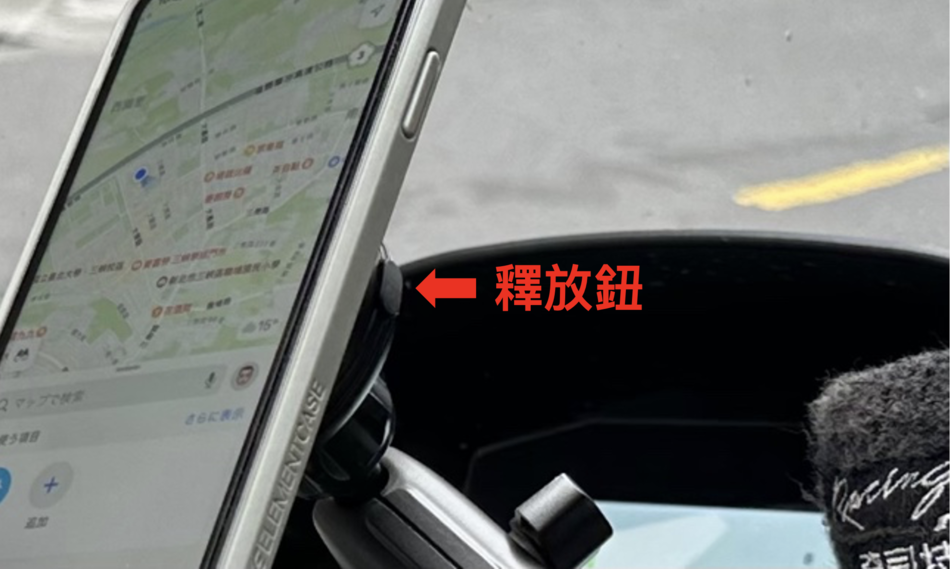
A side release button lets you remove the phone with a single press. Personally, I think this is a great design choice — it makes it considerably harder to remove your phone while riding, helping keep your focus on the road.
The USB-C power port delivers up to 15W of power for wireless charging under the right conditions, and also charges the built-in backup battery, maintaining a certain level of holding power in the mount even
after the vehicle is turned off and power is cut.
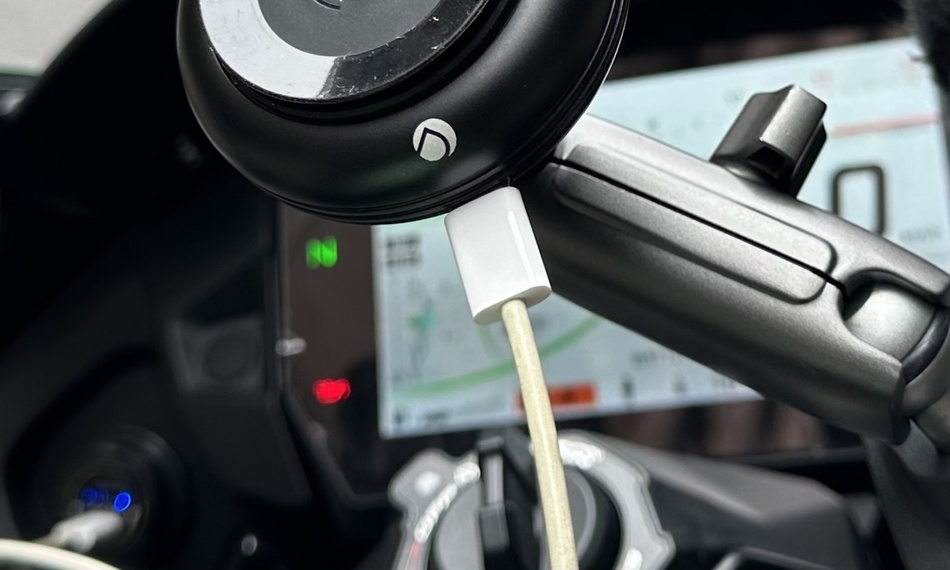
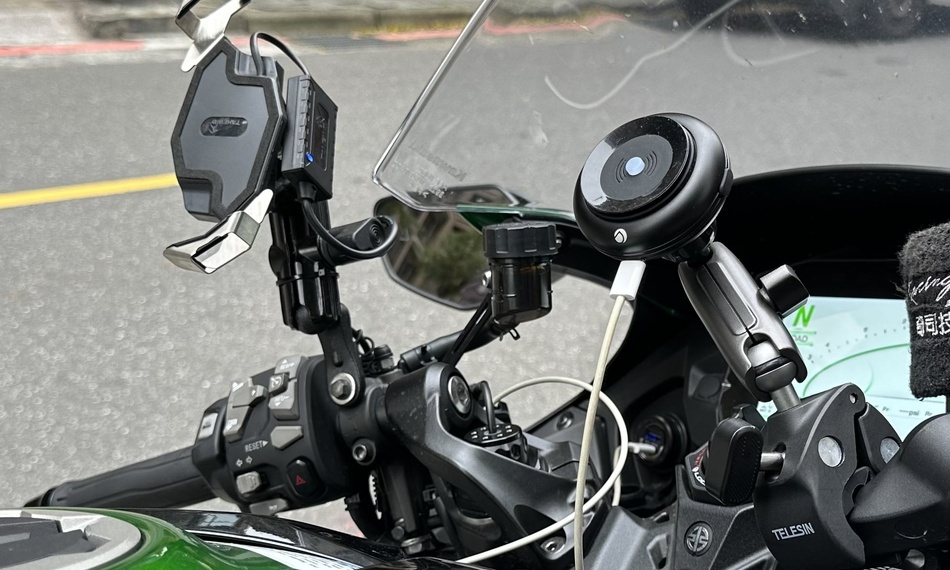
The ball joint used by Airput is the widely used 17mm size common to car mounts, making it easy to source. If pairing it with motorcycle ball-joint clamps or other accessories, I recommend using
a ball-joint adapter that's 17mm or larger on both ends for a secure installation. On the H2 SX SE, I mounted it using a heavier-duty crab claw clamp paired with a ball-joint clamp; on the Burgman 400,
I used a mirror-mount ball joint base, which suits the handlebar layout of most commuter scooters and is also the most commonly used mounting method.
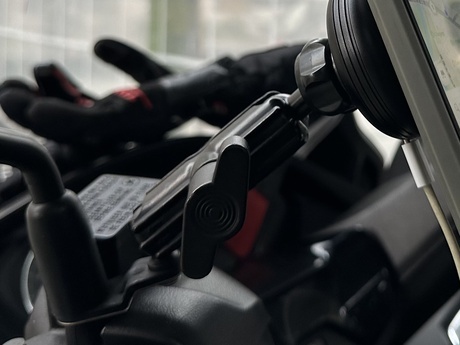
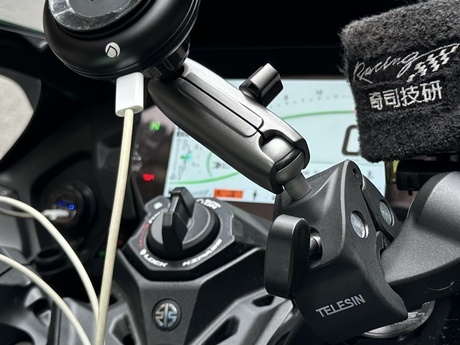
Common mirror-mount ball joint base method Crab claw clamp method
Now let's hit the road for a real-world test!
"Vacuum suction" is Airput's biggest and most distinctive feature, and its stability on a motorcycle is probably what everyone's most curious about. I rode the
Burgman 400 along the somewhat bumpy Taiwan Freeway 65, and its performance genuinely impressed me! Whether riding into headwinds, or hitting large potholes,
expansion joints, or other rough patches, the phone stayed firmly attached to the mount. Even on stretches of flat road with notably damaged surfaces, there was never any sign of it
coming close to detaching. And due to wind noise while riding, you can barely hear the pump operating at all — it felt like Airput was quietly, steadfastly guarding my phone, which was genuinely reassuring!

Next, I hopped on Kawasaki's crown jewel of advanced technology, the H2 SX SE. The H2's exquisite build quality paired beautifully with the Airput's premium aluminum alloy shell — like icing on the
cake. Thanks to the windscreen fairing design, mounting it on the handlebars made it even less susceptible to headwind interference, and paired with the heavier-duty ball-joint clamp, there was even less
concern about the mount shaking loose and increasing the risk of dropping the phone. By this point, the phone's battery was mostly drained, so I plugged into the car's 12V charging socket, and the PD3.0-spec, up to 15W fast
wireless charging quickly topped up a good amount of power — adding as much as 10% battery capacity over roughly a 20-minute ride (the navigation phone wasn't equipped with fast-charging support,
so this figure is for reference only; actual charging speed will vary depending on the device).
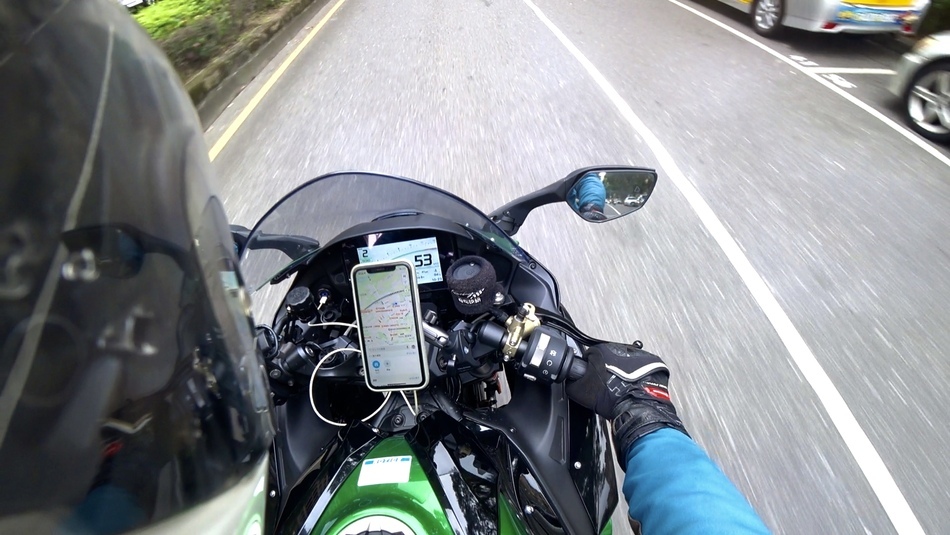
Based on the results of this test, even though Airput was designed primarily with car use in mind, it delivers a surprisingly impressive experience on a motorcycle as well,
performing quite admirably in terms of both suction stability and charging reliability. Given how well it performs in the higher-risk environment of a motorcycle, it goes without saying how much convenience and
driving safety it brings when used in a car — Airput is absolutely a phone mount option not to be missed! If Deff decides to develop a dedicated two-wheeler version of Airput in the future, adding
features widely discussed in the two-wheeler phone mount market — like vibration resistance, anti-detachment mechanisms, a sealed waterproof housing, and an improved charging cable design — it would undoubtedly
spark a conversation in the current market that simply can't be ignored!
Share:
Patented, Fully Safety-Certified Vacuum-Suction Wireless Charging Phone Mount Redefines the Driver-Phone Connection
Thanks for Your Patience! The Deff DURO for Samsung S24 Ultra Kevlar Fiber Featherweight Impact-Resistant Case Is Coming Soon